Resumen
El presente artículo investiga las habilidades críticas y creativas en la literacidad de los fans del remake de Vale Tudo (TV Globo, 2025) en TikTok. Considerando la importancia de la obra de 1988 y las transformaciones recientes del ecosistema mediático en torno a la televisión brasileña, como el fenómeno de la plataformización y la intensificación de los fandoms, el estudio tiene como objetivo comprender cómo los fans actúan como coautores, ampliando o cuestionando los sentidos del canon. Para ello, se aplicó un protocolo de análisis en tres dimensiones: Universo de Referencia, Arquitectura Informacional y Pedagogía Pop. La muestra reunió 100 videos publicados por 56 perfiles de fans, recolectados mediante web scraping y procesados en Python, con selección por metadatos y análisis cualitativo de los elementos textuales, visuales y sonoros. Los resultados revelaron tres formatos principales: reproducción de escenas, edits y memes. Se observó el dominio del canon, el uso estratégico de las affordances de la plataforma (plantillas, pistas musicales, superposiciones gráficas, hashtags) y conexiones metatextuales, como bastidores y entrevistas. Los edits asociaron personajes a temas como empoderamiento, mientras que los memes ironizaron incoherencias narrativas y aproximaron la trama a lo cotidiano, instaurando controversias. Se concluye que TikTok funciona como un espacio de pedagogía pop, en el cual la audiencia negocia sentidos, ejerce competencias de evaluación, remix y resignificación, y participa activamente en la coautoría del texto mediático.
Palabras claves: Telenovela, fandom, literacidad de fan, vale tudo, tiktok.
Abstract
This paper investigates the critical and creative skills in fan literacy around the remake of Vale Tudo (TV Globo, 2025) on TikTok. Considering the importance of the 1988 production and the recent transformations in the media ecosystem surrounding Brazilian television—such as the phenomenon of platformization and the intensification of fandoms—the study aims to understand how fans act as co-authors, expanding or contesting canonical meanings. To this end, an analytical protocol was applied across three dimensions: Reference Universe, Informational Architecture, and Pop Pedagogy. The sample consisted of 100 videos published by 56 fan profiles, collected through web scraping and processed in Python, with metadata-based selection and qualitative analysis of textual, visual, and sound elements. The results revealed three main formats: scene reproductions, edits, and memes. Findings indicate mastery of the canon, strategic use of the platform’s affordances (templates, soundtracks, graphic overlays, hashtags), and metatextual connections, such as behind-the-scenes content and interviews. Edits associated characters with themes such as empowerment, while memes mocked narrative inconsistencies and brought the plot closer to everyday life, sparking controversies. The study concludes that TikTok functions as a space of pop pedagogy, where audiences negotiate meanings, exercise competencies of evaluation, remix, and re-signification, and actively participate in the co-authorship of the media text.
Keywords: Telenovela, fandom, literacy, vale tudo, tiktok.
1. Introduction
The announcement that TV Globo intended to remake Vale Tudo (1988-89), considered by critics to be “the best Brazilian telenovela of all time” (Sarmento, 2021), was received by the public with both anticipation and skepticism: “some people believe that it is so good that a new version could take away its brilliance, while others believe that because it is so good, it deserves to be revisited” (Gonçalves, 2024). In this context, the online activity of fans of the original version was a factor that contributed to the audience’s anxiety, preparing the ground for the new take on the work.
Even before the remake’s premiere, social media was flooded with iconic scenes from the 1988 version, such as the confrontations between the heroine Solange and the villain Maria de Fátima, the mysterious murder of billionaire Odete Roitman, and the moment when the incorruptible protagonist Raquel tears her daughter’s wedding dress. By tapping into the media memory of Vale Tudo, these posts intensified the excitement around the new version.
Throughout its broadcast, such practices remained active, with comments, memes, edits, and video reviews that evaluated the remake and amplified the spread of its scenes. At the same time, this fan-made content displays skills that can be interpreted from the perspective of telenovela fan literacy (Sigiliano & Borges, 2024; Sigiliano et al., 2025).
Telenovelas are one of the main cultural products of Brazil and Latin America, but there are still gaps in research on their fans (Amaral et al., 2024). Previous studies have mapped general habits and behavioral patterns. Works such as those by Souza (2007), Lopes et al. (2015), Baccega et al. (2015), Sigiliano & Borges (2021), and Lima et al. (2024) have argued that avid viewers engage not only with the plot, characters, and authors but also with behind-the-scenes material and production processes. Souza (2007) and Lima et al. (2024) state that, as they consume the reference universes and their respective metatexts, fans build a media repertoire on the genre, understanding and recognizing the textual conventions of telenovelas
Within this framework, the notion of fan literacy emerges. The concept refers to “[…] a set of critical and creative skills involving the ability to evaluate, produce, participate in, reframe, and distribute media content from its reference universe” (Sigiliano & Borges, 2024, p.81). Driven by their emotional and intellectual involvement with the media text, fans recognize the stylistic, aesthetic, and narrative codes of the fictional universe, developing the ability to evaluate coherence and to project possible plot developments (Sigiliano & Borges, 2024). The multidisciplinary nature of fan literacy also encompasses the establishment of networked communities, the mastery of operational and informational architectures, the reframing of interpretive layers, and the deliberation on social debates proposed by the stories. It should be noted that the term “fan” used here is not restricted to celebratory manifestations; fan literacy activities may also be critical, ironic, or even destructive, encompassing the practices of anti-fans - those who hate or strongly dislike a given work and/or genre, considering it futile, stupid, morally bankrupt, or simply an aesthetic waste (Gray, 2003).
This study examines how Vale Tudo fans mobilize critical and creative literacies in their TikTok video practices. The methodology draws on the protocol developed by Observatório da Qualidade no Audiovisual (Audiovisual Quality Observatory), which is built around three dimensions of fan literacy: Reference Universe, TikTok’s Informational Architecture, and Pedagogy of Pop. The model was applied to the analysis of 100 videos made by 56 profiles identified as fans of the remake on the platform.
Our discussion opens with an examination of Vale Tudo’s significance for Brazilian television drama, situating it within the broader transformations of the telenovela and the television industry in recent decades.
2. Vale Tudo: from the original to the remake, shifting contexts of the Brazilian television industry
Written by Gilberto Braga, Aguinaldo Silva, and Leonor Bassères, Vale Tudo (which can be roughly translated as Anything Goes, TV Globo, 1988–89) became a landmark in Brazilian television for the way it connected with the sentiments of its time, showing how telenovelas came to participate in the national public sphere (Hamburger, 2005). The telenovela premiered shortly after the end of the Military Dictatorship period, during the drafting of the new Constitution amid anxiety and uncertainty. Its narrative directly addressed the corruption that characterized Brazil’s social and political order, capturing collective tensions over the country’s future. “As the very title clearly suggests, the theme of the telenovela is the general decline of values and customs across all spheres of Brazilian society” (Balogh, 2022, p. 174). The script explored issues such as corporate corruption, white collar crime, the anticipated changes brought by the new Constitution, and the prospect of future direct elections (Gonçalves, 2024).
Vale Tudo tells the story of characters willing to do anything in the pursuit of wealth and power - even betray their own mother, marry and cheat for money, evade taxes, or sell their own child. The plot revolves around Raquel Acioli, a humble tour guide who lives with her father and her daughter, Maria de Fátima. Fátima despises poverty and will stop at nothing to become rich. After her grandfather dies, she sells the family home and flees to Rio de Janeiro, where she becomes involved with César, a hustler. Raquel travels to the capital in search of her daughter and to prove that social mobility in Brazil is possible through honest work. Meanwhile, Fátima devises a plan to marry Afonso Roitman, the son of the billionaire villain Odete Roitman. Other characters complicate this central plotline, such as Ivan, Raquel’s love interest; Solange, Afonso’s girlfriend, whom Fátima manipulates; and Helena, Afonso’s sister.
From its opening credits, featuring national symbols and images highlighting the country’s social inequalities, Vale Tudo presented itself as an arena for problematizing the nation (Lopes, 2009). The characters’ arcs offered a fertile ground for discussing Brazil’s social contrasts, establishing a blend of fiction and reality that came to define the genre.
Its impact was not only expressed in its high audience ratings - which exceeded 80% in the final episodes (Hamburger, 2005) - but also in its presence across different sectors of society. Raquel’s saga, the atrocities Fátima commits against her, and the mystery surrounding the murder of Odete Roitman prompted viewers to engage in debates about “political and class corruption in Brazil at the time” (Hamburger, 2005, p. 116). Everywhere, people were talking about it. Perhaps for this reason, it stands as one of the most emblematic examples of Brazilian television drama in demonstrating television’s ability to provide a public sphere for debate superior to those of the press or political parties (Mulgan, 1990).
Despite the ephemeral nature of telenovelas, Gilberto Braga’s work has endured overtime. Iconic excerpts can be found on YouTube. It was rerun on the subscription channel Viva between 2010 and 2011, once again receiving praise. More than three decades after its first debut, in 2020, it was made fully available on Globo’s streaming platform, Globoplay. A year later, Brazilian television critics unanimously ranked it among the best telenovelas in history (Sarmento, 2021). “The endurance of the work within a genre generally regarded as disposable is remarkable” (Hamburger, 2011, pp. 76–77).
Globo’s decision to produce a new version of Vale Tudo, written by author Manuela Dias, followed the positive reception of other remakes of successful telenovelas aired in the prime-time slot, such as Pantanal (2022) and Renascer (2023). However, the contemporary landscape of telenovela production, distribution, and consumption is significantly different from that of 1988, when there was no internet, and Brazilian audiences relied on an average of nine broadcast television channels as their primary form of domestic entertainment.
2.1. Telenovela as a networked experience
The growing supply of audiovisual productions - especially because of streaming and video-on-demand (VoD) services such as Netflix and Globoplay - makes the audience numbers achieved by the original Vale Tudo unimaginable in 2025, when the remake aired. In recent years, Brazilian television networks have registered steady declines in their audience ratings, while the internet holds the highest penetration among media platforms (Lopes et al., 2023).
Especially since the 2010s, scholars have observed a trend toward the “serialization of telenovelas” (Lopes, 2024, p. 11). Lopes (2024) identifies several relevant markers of this hybridization of genres: the dialectic between the local, national, and transnational; the decentralization of the television industry; innovations in digital storytelling; shifts in consumer habits; and audiences’ struggles for diversity and representation. This change is most evident in faster-paced narratives that accelerate the development of stories and characters. For instance, while the original Vale Tudo comprised 204 episodes, the 2025 remake was planned with 173, following the trend toward shorter serials. The emergence of series formats with reduced length is also an example of these innovations.
Lopes (2024) regards contemporary television as a digital-narrative ecosystem, choosing the term “TransTV” to account for its reconfigured modes of production, distribution, and viewing. From this perspective, it becomes possible to intervene in these multiple contemporary transformations of television, emphasizing the need to think of them holistically, as a system. Technological changes in the industry cannot be separated from aesthetic and narratological transformations, nor from viewers’ television experiences (Lopes, 2024). Hills (2018) had already used the term “trans TV” to describe how streaming platforms produce a discursively multiple experience of television. He argues that the platformization of audiovisual content drives audience datafication, whereby user data are analyzed to shape aesthetic and narrative strategies in television texts (Lima, 2018).
Beyond streaming, broadcast television is inseparable from the spread of content on social media, where telenovela fans engage in practices ranging from memes and fan fiction to critical debates and derivative video creation(Lima et al, 2024). The dispersion of content across multiple media platforms reconfigures audience engagement, enabling new forms of interaction with television programs that may bypass television altogether (Gutmann, 2021). This dynamic engenders unique modes of consumption, shaped by the logic of the network - the social fabric of our contemporary communicational experience (Gutmann, 2021).
[…] we are dealing with an audiovisual consumption that is deeply networked and not necessarily “initiated” by television or dependent on a TV program. Nor is it merely a case of television repercussion on the internet, but rather of dispersed audio-verbal-visual fabrics that together compose this communicational experience - whether around a program, a news piece, a series, a music video, a tweet, and so on (Gutmann, 2021, p. 67).
Short-video platforms such as TikTok and Instagram Reels have gained prominence and transformed the audience’s relationship with television shows, including telenovelas (Campos et al., 2025). They have become a kind of “condensed” second screen, where narratives are compressed in duration and amplified by algorithms privileging instant interaction. In 2023, TikTok reported that the hashtag #Novelas had surpassed 45 billion views, showing the centrality of these platforms in telenovela consumption (Campos et al., 2025).
Vale Tudo’s remake emerged on social media well before its premiere, amid these broader reconfigurations. Clips from the original – fully available on Globoplay - were increasingly shared. Every piece of information, image, or statement about the telenovela was quickly subjected to the scrutiny of a hyperconnected audience eager to learn details about the new cast and the updates to the plot. Among the most significant changes were the casting of black actresses to play Raquel (Taís Araújo) and Fátima (Bella Campos), the explicit acknowledgment of the sapphic relationship between Cecília and Laís, and the creation of entirely new storylines for some characters.
When the remake premiered on March 31, 2025, its audience ratings fell short of Globo’s expectations (Benício, 2025). Yet within just three months on air, it achieved the highest revenue in telenovela history and became the most-watched title on Globoplay, both on demand and in synchronous streaming (Sacchitiello, 2025). On social media, Manuela Dias’s version kept a constant presence among trending topics, garnering the highest engagement on social networks among the network’s prime-time telenovelas since 2022 (Campos et al., 2025).
This apparent contradiction between declining ratings and high engagement on streaming and social media is symptomatic of those larger changes in the industry. Amid criticism and praise, jokes and comparisons, the fact remains that Vale Tudo secured a relevant place in the public sphere throughout its broadcast. For this reason, the activity of Vale Tudo fans on TikTok - a platform that has reconfigured audiovisual consumption in contemporary culture - warrants closer examination.
3. Methods
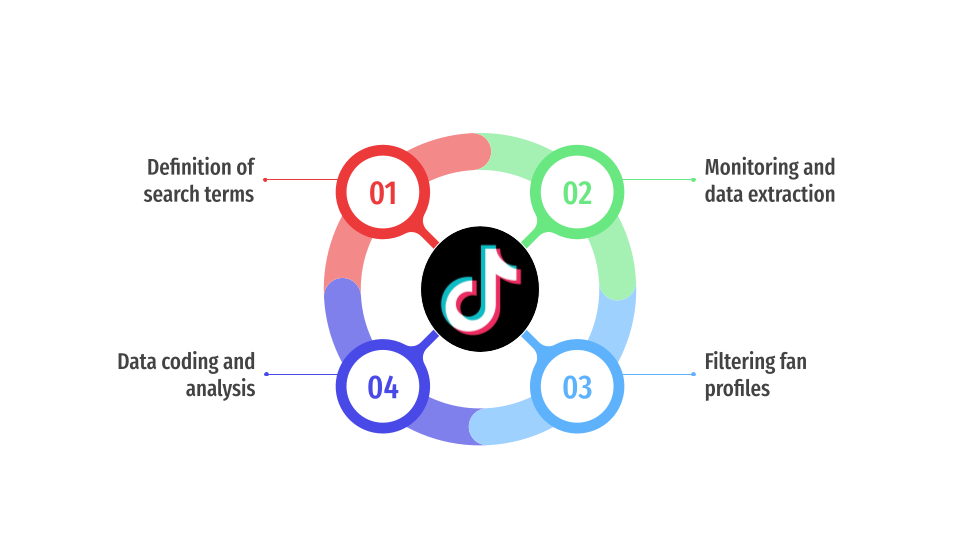
Before analyzing the critical and creative skills at play in the fan literacy of Vale Tudo on TikTok, it is important to describe the protocol adopted for data monitoring, extraction, and coding. Developed within Observatório da Qualidade no Audiovisual (Audiovisual Quality Observatory), this protocol is structured in four stages.
Figure 1. Protocol stages
Source: Own elaboration.
The first stage, carried out on August 12, 2025, focused on defining the keywords and hashtags related to the fictional universe of Vale Tudo to be used in TikTok searches. We identified 18 terms in total, including the title of the telenovela as well as the protagonists, antagonists, and the most prominent supporting characters.
The second stage, conducted on August 15, 2025, involved monitoring and collecting data. To extract the content, we used Zeeschuimer, a tool developed by the Digital Methods Initiative (Peeters, 2025). The collected data were then processed with the Pandas library in Python.
In the third stage, we filtered the data. The social profiles were selected based on both individuation features (profile picture, username, and description) and structural layers of information (Recuero, 2009; Bruns & Moe, 2013). To be included in the sample, fan accounts had to display not only aesthetic features referencing Vale Tudo but also videos dedicated to the telenovela itself. From the metadata, we narrowed down 500 videos published by 700 extracted profiles to a final sample of 100 videos produced by 56 fan-managed accounts.
Table 1. Search terms and fan-managed accouts
|
Terms
|
Fan-managed accounts
|
|
"Vale Tudo" AND ("Raquel Accioli" OR "Maria de Fátima" OR "Ivan Meireles"
OR "Odete Roitman" OR "Marco Aurélio" OR "Afonso Roitman" OR "Heleninha Roitman"
OR "Solange" OR "César Ribeiro" OR "Leila" OR "Bartolomeu" OR "Tia Celina" OR "Gilda")
|
@novela_valetudo1, @novela.valetudo, @solangeduprat.ofc, @odeteroitmanironicafr, @afonsol_, @solangeduprat_ , @valetudo.oficial, @valetudoeditz, @valetudo_88, @valetudo_remake, @valetudo_fandom, @valetudo_memes, @valetudoiconica, @valetudo_fanpage, @solangedupratfan, @solangeduprat.edits, @solange_valetudo, @solangeduprat.ironia, @solangeduprat88, @solangedupratbr, @solangeduprat.real, @solangequeen_, @odeteroitmanironica, @odeteroitman.ofc, @odeteroitman_25, @odeteroitmanmemes, @odeteroitmaniconica2, @odeteroitmanreal, @odeteroitmanboss, @odete.roitmanbr, @odetequeen,@odeteroitmanlegacy, @raquelaccioli.ofc, @raquelvaletudo, @raquelaccioli_, @raquelaccioliedits, @mariadefatima.real, @mariadefatima25, @mariadefatimafans, @afonsoroitman_, @afonsoool_, @afonsolf, @marcoaureliovaletudo, @heleninharoitman_, @heleninha_valetudo, @bartolomeu.tv, @celinavaletudo, @valetudo_revival, @valetudo_2025, @valetudolovers, @valetudo_rewind, @valetudo_nostalgia, @valetudo_flashback, @odeteroitmanvibes, @solangedupratclips, @valetudo_archives
|
Source: Own elaboration.
The final stage focused on data coding and analysis. We accessed each video to systematize the elements described in the theoretical-methodological framework of fan literacy, based on their similarities and idiosyncrasies.
The analysis of critical and creative skills at play in Vale Tudo’s fan literacy is grounded in the theoretical-methodological framework developed within Observatório da Qualidade no Audiovisual (Audiovisual Quality Observatory). It is organized into three dimensions: (1) Reference Universe, (2) Informational Architecture (in this case, of TikTok), and (3) Pedagogy of Pop.
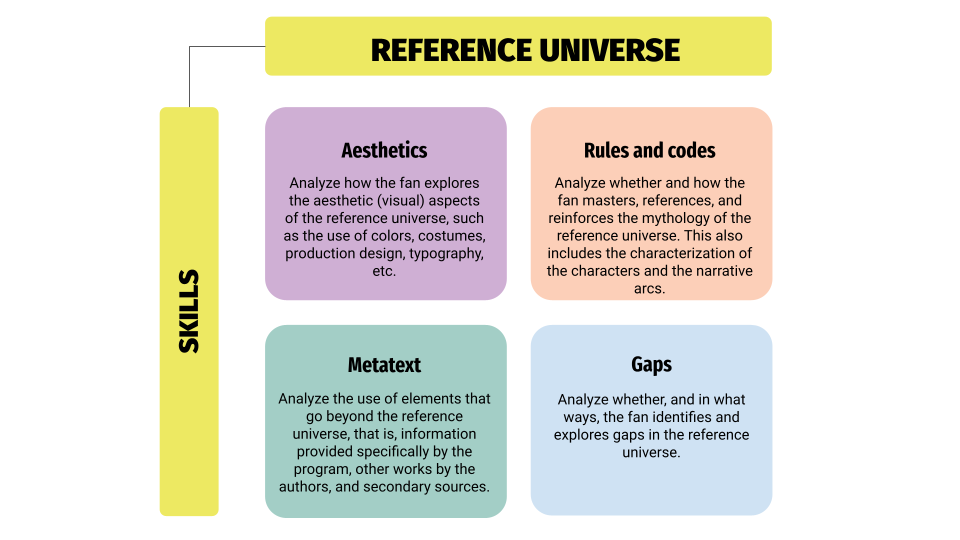
Figure 2. Skills analyzed in the Reference Universe dimension
Source: Own elaboration.
The Reference Universe dimension evaluates fan mastery of the canon through four skills: (a) aesthetics, (b) rules and codes, (c) metatext, and (d) gaps. The aesthetic skill considers how fans engage with the visual aspects of Vale Tudo’s universe, including the color palette, costumes, production design, visual identity, and typography. The rules and codes skill examines whether and how fans master, reference, or support the conventions of the original fictional universe, thereby lending verisimilitude to their creations. This skill also encompasses elements such as character profiles, relationships between storylines, and the development of narrative arcs. The metatext skill assesses how fan creations engage with elements beyond the fictional universe, such as behind-the-scenes information, the creative process, the artistic work of authors and cast, and secondary sources like newspapers, specialized websites, and interviews. Finally, the fourth skill in this dimension considers whether and how fans identify and explore gaps in the telenovela’s fictional universe.
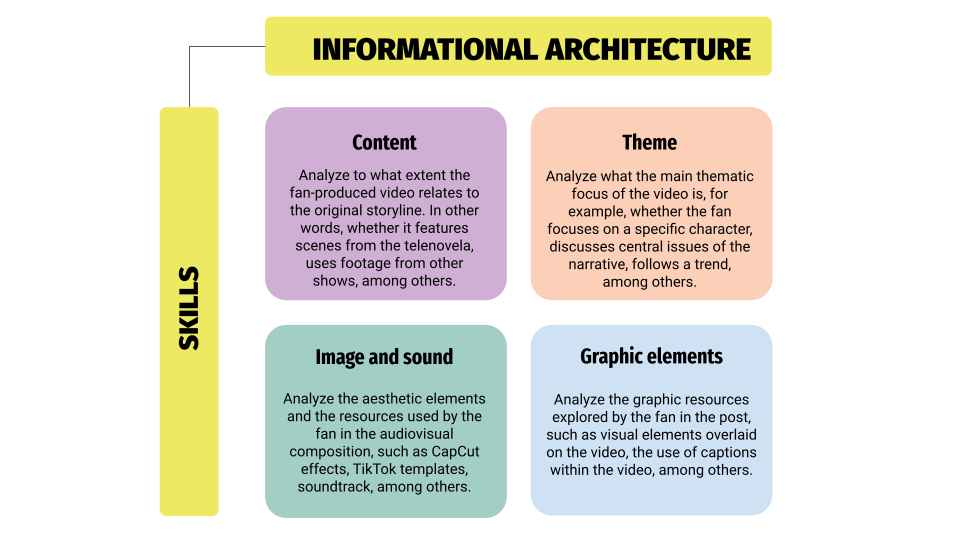
The Informational Architecture dimension is grounded in the affordances of TikTok, the chosen platform for this study. According to Abidin and Lee (2023), methodological approaches to the video social app must address not only its multimodal content but also the cultural and contextual settings of the videos. This dimension is therefore organized into four skills: (a) content, (b) theme, (c) image and sound, and (d) graphic elements.
Figure 3. Skills analyzed in the Informational Architecture dimension
Source: Own elaboration.
The content skill concerns how TikTok’s recommendation algorithm influences the production and spread of content on the platform. According to Boffone (2022) and Pérez-Rodríguez et al. (2022), unlike Instagram and X, which are guided by more general metrics such as shares and likes, TikTok’s algorithm prioritizes user engagement metrics such as comments, watch time, and searches. As a result, the feed is composed of more diverse and personalized content, facilitating the discovery of videos that more precisely align with users’ interests. The recommendation algorithm, combined with factors such as publishing viability, video format, and duration, enables the platform to host a wide range of content shaped by diverse goals, framings, and contexts (Siles et al., 2024). This skill examines the extent to which fan-made videos relate to the canon text. The interplay between canon and fan content is evident, for instance, in the use of scenes from the telenovela, in fan references within review or analytical videos, and in curatorial practices.
Theme addresses the main thematic focus of the video. It considers, for example, whether the fan highlights a specific character, discusses main topics of Vale Tudo, connects the show with similar works, or follows a trend. According to Boffone (2022) and Pérez-Rodríguez et al. (2022), TikTok also offers a variety of editing tools, filters, and effects that allow users to enhance their videos creatively, using features such as music, visual effects, and text overlays. The authors argue that both the platform’s native features and those integrated through associated apps such as CapCut reinforce its memetic bias, enabling users to quickly reproduce viral content built on pre-defined elements.
Image and sound examines the aesthetic resources fans employ in the audiovisual composition of their videos, such as effects, native templates, and soundtracks. Finally, graphic elements considers the visual resources fans use in their posts, including images or text overlaid on the video and the use of captions. The third and final dimension of fan literacy examines the connections fans establish between the reference universe, other works, and/or reality, thereby generating new interpretive layers. Pedagogy of Pop refers to formal or informal educational approaches that integrate pop culture into teaching and learning processes (Janak & Blum, 2013; Maudlin & Sandlin, 2015). By exploring pop music, TV shows, and video games in pedagogical contexts, individuals are encouraged through their emotional and intellectual engagement with these texts to reflect critically on media. According to Janak and Blum (2013) and Sigiliano & Borges (2024), pop culture plays a key role in shaping how individuals perceive and make sense of the world around them.
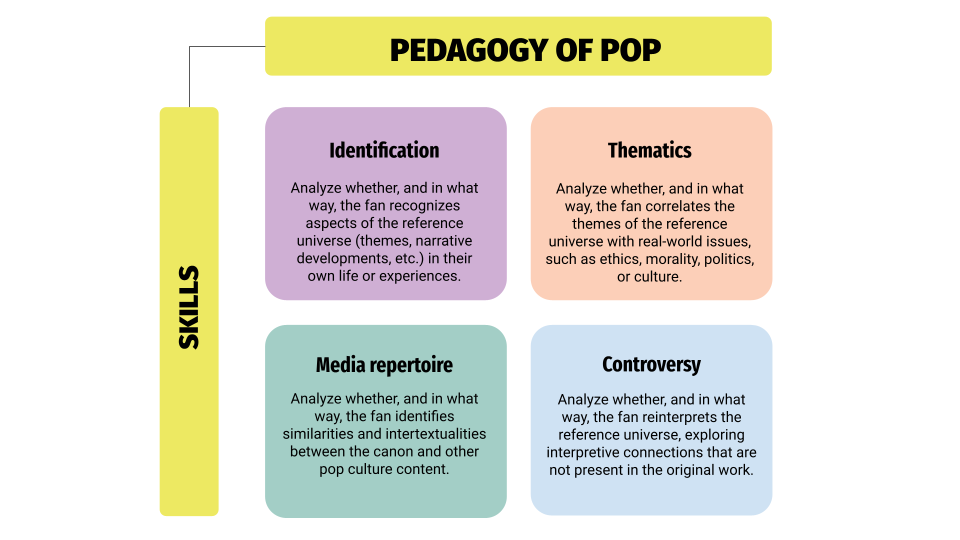
Figure 4. Skills analyzed in the Pedagogy of Pop dimension
Source: Own elaboration.
This dimension comprises four skills: (a) identification, (b) thematics, (c) media repertoire, and (d) controversy. Identification consists in assessing whether fans recognize aspects of the reference universe (themes, narrative developments, characters etc.) in their lives and/or personal experiences. The second skill, thematics, refers to how these themes are related to real-world issues such as ethics, morality, politics, and culture. The third skill investigates how fans identify similarities and intertextualities between the canon text and other pop culture content. Finally, controversy examines how fans re-signify the reference universe, exploring interpretive connections that are not present in the original work.
4. Results and Discussion
4.1. Reference Universe
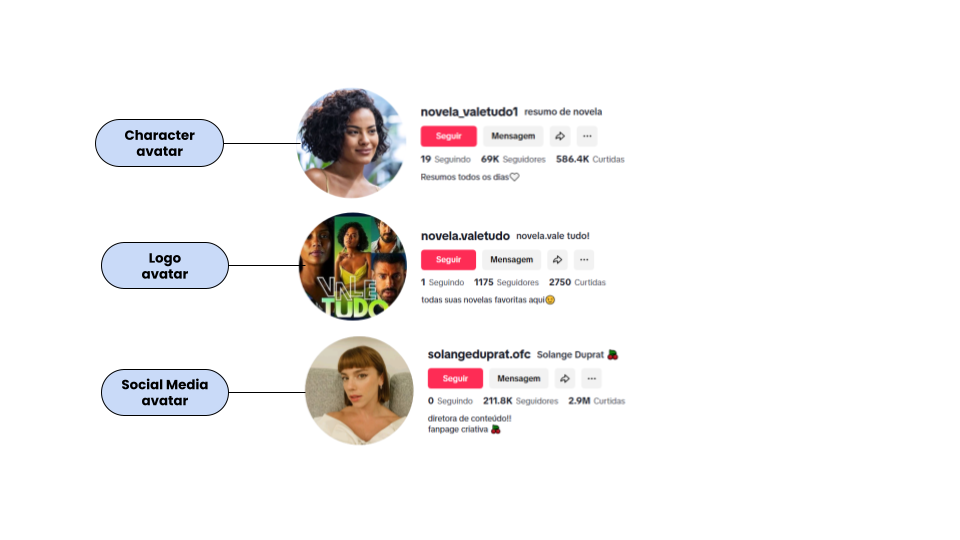
As mentioned, this dimension involves four skills. The first is aesthetic, evident mainly in the profile pictures fans use on TikTok. Most accounts adopt Vale Tudo’s logo (from the 1988 or 2025 versions), or promotional images released by Globo. But many fans go beyond official material. Among the 56 profiles, 21 feature photographs retrieved from cast members’ personal social media accounts, as well as montages that combine the telenovela’s logo with photos of characters such as Maria de Fátima, Raquel, and Odete Roitman. This practice also serves to segment content: profiles that use avatars of specific characters (such as Solange, Odete, or Fátima) post only videos related to them, whereas those that adopt the logo represent the fictional universe as a whole.
Figure 5. Fans use a variety of profile pictures, extending beyond official promotional images
Source: Own elaboration.
The Rules and Codes skill is evident in the fan-made videos, which were classified into three subcategories: (a) scene fragments, (b) edits, and (c) memes. The first refers solely to excerpts and scenes extracted from the telenovela. Fans select this material based on its relevance to the development of a character arc and/or the storyline and make it available on their pages.
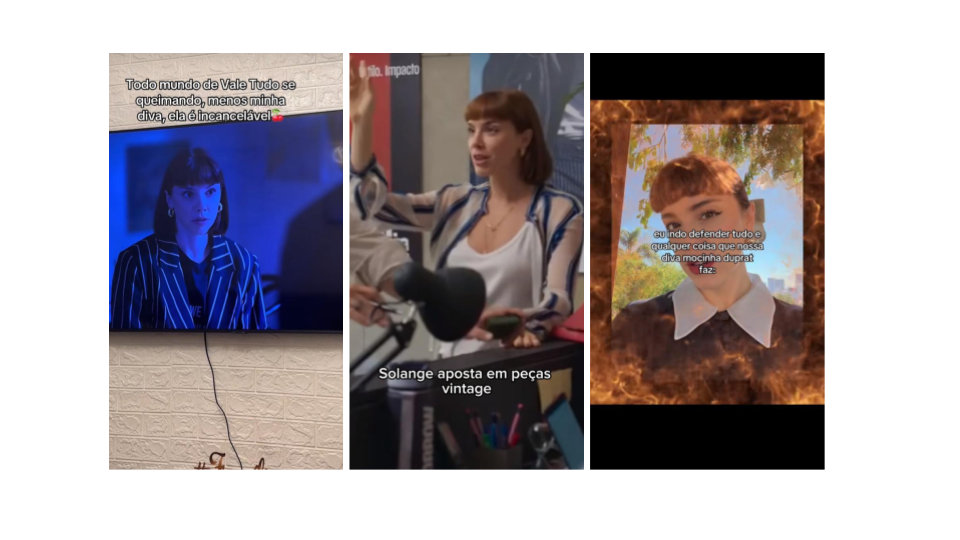
The second category are the edits, a video format characterized by quick cuts, visual effects, transitions, and synchronization with music (Munger, 2025). These videos compile short clips of scenes featuring specific characters and/or storylines, often making use of TikTok’s native tools as well as associated apps. Although they draw from excerpts of the telenovela, edits expand the meaning of the canon. By combining multiple elements, such as images, graphics, and sound, fans connect the fictional universe with other contexts. For instance, edits of Solange outline the character’s personality by pairing her scenes with empowering messages and songs.
The third category consists of videos classified as memes. Those mainly mock aspects of the story (such as narrative inconsistencies and continuity errors) and/or connect the plot to everyday situations. The profile @odeteroitmanironica, for instance, associates the villain Odete Roitman’s mannerisms and lines with daily events, such as “When someone calls me instead of texting” or “Me listening to a story I already know all the gossip about”. Whether emphasizing, expanding, or reinterpreting the fictional universe of Vale Tudo, fans demonstrate a deep repertoire of knowledge about the telenovela.
Metatext was only occasionally observed in the sample. Only 19 videos included content that went beyond the fictional universe. These focused on the creative process of the production team and behind-the-scenes aspects of the telenovela. Posts featured excerpts from cast members interviews on TV Globo programs, as well as videos shared on the actors’ personal social media accounts. The fourth skill within the Reference Universe dimension encompasses videos that highlighted contradictions and inconsistencies between the versions of Vale Tudo, as well as continuity errors across sequences. Fans drew attention to changes between the 1988 and 2025 versions, such as Solange’s betrayal, Renato’s burnout, and the financial situation of Tomorrow Lab, the advertising agency within the fictional universe. Fans also pointed out flaws in visual composition, including costume changes within the same scene and the use of unconvincing props.
4.2. TikTok’s Informational Architecture
The first skill in this dimension assesses the extent to which the videos establish a relationship with Vale Tudo. Although they serve different purposes - supporting, expanding, or reinterpreting the plot - all make direct reference to the telenovela. All 100 videos in the sample relate to its paratext or metatext. The association between fan-made content and the remake is established with excerpts from the show, interviews, behind-the-scenes material, and posts from the cast’s social media. No cases were observed in which the telenovela was referenced indirectly - for instance, alongside other Brazilian television dramas or without visual elements that explicitly linked it to the work.
The second skill examines the thematic focus of the videos. As mentioned, the content was classified into scene fragments, edits, and memes. Profiles that fall into the first category function as repositories of excerpts from the telenovela’s chapters. In addition to sharing copyrighted material from Globo - thus extending the spread of the story beyond broadcast TV, Globoplay, and the network’s official accounts - fans also act as curators. These fan accounts do not post full chapters, but only selected excerpts. The cuts are chosen for their relevance to the narrative arc of a specific character or to the fictional universe. By selecting which clips to publish, fans engage, even indirectly, in critical evaluation on the narrative structure and the relevance of content to TikTok’s algorithm.
Among the videos categorized as edits, fans drew on the characteristic language of the format to combine excerpts from the paratext and/or metatext. These videos centered on a single character or a couple from the story and served to express affection and admiration. In other words, they celebrated canonic choices and/or associated them with broader contexts such as feminism, empowerment, or romance.
Memes generated new layers of meaning within the fictional universe. Videos in this category drew on character reactions to specific situations or connected lines to everyday contexts. By reframing scenes, viewers often unintentionally make the plot accessible to broader audiences, since even users who do not watch Vale Tudo may identify with a meme and share it.
The skill concerning image and sound examines the aesthetic elements and resources fans employ in creating their videos. We observed the frequent use of transition effects native to CapCut, the editing app. Effects such as Flash/White, Glow, and Motion Blur were applied to create rapid transitions synchronized with the soundtrack, accentuate characters with light outlines, and smooth out movements, thereby enhancing the fluidity of scene changes. The app’s features contributed to the visual unity of the videos, particularly in edits, which are composed of multiple sequences.
The soundtrack included both songs that are part of the canon - such as Brasil, Faz Parte do Meu Show, and Modern Love - and trending tracks on the platform, such as Illegal, Blow My High, and Cosmic Love. TikTok’s “Add Sound” feature was used to enhance the meanings already present in the reference universe, highlighting elements integral to the plot. An example is the video posted by the fan account @afonsol_, dedicated to the couple Solange and Afonso. The profile featured edits that compile romantic scenes of the characters set to the theme song Faz Parte do Meu Show, part of the official soundtrack. Although this skill aligns with TikTok’s architecture, fans employed it to reinforce the fictional universe, further extending the telenovela’s meaning-making process.
The fourth and final skill concerns the graphic resources explored in the posts. Graphic overlays were used in the videos to add context. Text elements explained, illustrated, or complemented the content - for example, by indicating the original air date of a specific scene, naming the ship featured in an edit, or providing captions to anchor the meaning of a meme.
Although all 100 posts included captions, they were brief and did not contribute to informational clarity. Even when related to the video content, this feature did not serve to complement the audiovisual narrative. For example, a post from the account @solangeduprat_ featured the scene in which Sardinha reveals to Solange that Maria de Fátima was cheating on Afonso. The caption read: “Solange didn’t even hide that she loved finding out Afonso was being cheated on”.
The hashtags used by fans in their posts helped situate the content thematically. In the sample, we observed both general indexing terms (#valetudo, #valetudoremake, #novela) and more specific ones (#solangeduprat, #MariaDeFátima, #OdeteRoitman). By adopting these hashtags, fans stimulated engagement around the content and broadened its reach.
4.3. Pedagogy of Pop
Within the Pedagogy of Pop dimension, the identification skill can be seen in videos related to Solange. In both versions of Vale Tudo, the character is portrayed as a strong heroine, a defender of feminist values who stands against the manipulation and corruption typical of Brazil’s elite. Fan videos - especially edits - associated Solange with empowerment, highlighting not only her ethical principles but also her dedication to work and her wardrobe.
Figure 6. Edits highlighted Solange’s character
Source: TikTok
As noted earlier, debates around morality and ethics are central to how meaning is produced within Vale Tudo’s reference universe. According to Hamburger (2005), through irony and cynicism, characters such as Odete Roitman, Ivan, and César embody the inversion of values in Brazil. In this context, fan-made videos drew parallels between the villain Odete and the country’s political landscape. Edits combined her lines and scenes with news headlines, highlighting cases of public fund embezzlement. In doing so, fans not only reinforced the connection between Brazil’s political context and the plot but also underscored the narrative’s plausibility by grounding it in real-world examples.
The media repertoire skill was only sporadically observed in the sample. Some character edits featured scenes of the actors in other telenovelas. For example, videos dedicated to the couple Solange and Afonso combined sequences from Vale Tudo with clips from other shows featuring actors Alice Wegmann and Humberto Carrão. Finally, the controversy skill is most evident in the creation of memes. These videos generated new interpretive layers within the canon. As noted in other skills, dramatic narrative arcs are reinterpreted in this process. By bringing the storyline closer to viewers’ everyday lives, fans used humor to exaggerate emotions, parody situations, and critically comment on the excesses of the plot.
5. Concluding remarks
The analysis of the critical and creative skills of Vale Tudo fans on TikTok highlights their knowledge of the fictional universe as well as their grasp of the platform’s informational architecture. In this sense, devoted viewers went beyond simply reproducing original material; they mobilize aesthetic, narrative, and multimodal resources to reinterpret the storyline. The use of profile pictures, soundtracks, graphic effects, and hashtags demonstrates a command of TikTok’s affordances and reveals fans’ ability to segment audiences and expand the spread of videos.
Fan-made edits and memes opened up new interpretive layers of the telenovela. Through elements such as quick cuts and transitions, edits heightened dramatic tension and connected characters with contemporary agendas, such as feminism. Memes, in turn, drew on irony to bring the narrative closer to viewers’ everyday lives. These practices of fan literacy not only expanded the canon but also establish connections that go beyond the text of the telenovela itself.
Fans’ critical understanding is evident in videos that highlighted continuity errors, narrative contradictions, and divergences between the 1988 and 2025 versions. By drawing attention to inconsistencies and linking scenes to journalistic reports or other television productions, fans adopted an analytical stance that shifts the telenovela from the realm of entertainment to a space of sociocultural reflection. These creations demonstrated how fan literacy transcends aesthetic enjoyment, encompassing the ability to interrogate the work and situate it within political and historical contexts.
The spread of videos and excerpts derived from the telenovela shapes how viewers engaged with the work, particularly within the framework of television as a digital-narrative ecosystem. Through fan activity, it is possible to consume the Vale Tudo remake without necessarily watching chapters, whether on broadcast TV or streaming platforms. This study contributes to understanding how fan repertoires, mediated by algorithms, generate new experiences of television consumption, where practices of sharing reconfigure reception and expand the fictional universe.
Finally, fans’ critical and creative skills constitute a collaborative process in which devoted viewers act as co-authors. On TikTok, content creation not only strengthens the affective bond with the narrative but also reshapes its meanings by placing the storyline within new languages and circuits of spread. Fan literacy of Vale Tudo underscores the central role of audiences in reinterpreting and expanding the Brazilian telenovela in contemporary times.
Referências Bibliográficas
Abidin, C., & Lee, J. (2023). Introduction to TikTok methodologies. Cultural Science Journal, 15(1), 30–34. https://doi.org/10.2478/csj-2023-0003
Amaral, A., et al. (2024). Fan studies in Latin America: A call to arms. Transformative Works and Cultures, 43. https://doi.org/10.3983/twc.2024.2689
Baccega, M. A., et al. (2015). Fãs de telenovelas: Construindo memórias – das mídias tradicionais às digitais. In M. I. V. Lopes (Org.), Por uma teoria de fãs da ficção televisiva brasileira (Vol. 1, pp. 65–106). Sulina.
Balogh, A. M. (2002). O discurso ficcional na TV: sedução e sonho em doses homeopáticas. EdUSP.
Benício, J. (2025, 21 de agosto). ‘Vale Tudo’ tem 50 capítulos para evitar ser novela das 9 com 2ª pior audiência da história. Terra. https://bit.ly/46punHn
Boffone, T. (Ed.). (2022). TikTok cultures in the United States. Routledge.
Bruns, A., & Moe, H. (2013). Structural layers of communication on Twitter. In A. Bruns, M. Mahrt, K. Weller, J. Burgess, & C. Puschmann (Eds.), Twitter and society (pp. 15–28). Peter Lang.
Campos, C. et al (2025). Novela em 60 segundos: O papel dos vídeos curtos na circulação, viralização e reconfiguração das ficções televisivas brasileiras. Trabalho apresentado no 48º Intercom, Vitória, ES, Brasil.
Chagas, V. (2021). Da memética aos memes de internet: Uma revisão da literatura. Revista Brasileira de Informação Bibliográfica em Ciências Sociais, 95.
Gonçalves, A. P. (2024). O Brasil mostra a sua cara: Vale Tudo, a telenovela que escancarou a elite e a corrupção brasileira. Editora Autografia.
Gray, J. (2003). New Audiences, New Textualities: Anti-Fans and Non-Fans. International Journal of Cultural Studies, 6(1), 64-81. https://doi.org/10.1177/1367877903006001004 (Original work published 2003)
Gutmann, J.F. (2021). Audiovisual em rede. Derivas conceituais. PPGCOM/UFMG.
Hamburger, E. (2005). O Brasil antenado: A sociedade da novela. Zahar.
Hamburger, E. (2011). Telenovelas e interpretações do Brasil. Letras Nacionais
Hills, M. (2018). Netflix, transfandom and ‘trans TV’: Where data-driven fandom meets fan reflexivity. Critical Studies in Television, 13(4), 495-498. https://doi.org/10.1177/1749602018797738
Janak, E., & Blum, D. (Eds.). (2011). The pedagogy of pop: Theoretical and practical strategies for success. Rowman & Littlefield.
Jenkins, H. (1992). Textual poachers: Television fans and participatory culture. Routledge.
Kozinets, R., & Jenkins, H. (2024). Defining fandom [Edição Kindle]. Gateway Planet Press.
Lima, C. A. (2018). Espectadores participativos em plataformas de sociabilidade: datificação e gestão das audiências. GEMInIS, 9(1), 18-39. DOI https://doi.org/10.4322/2179-1465.0901002
Lima, C. A. R. et al. (2024). Entre a celebração e a crítica: práticas dos fãs do casal sáfico Clarena, da telenovela “Vai na Fé”, no X. Observatorio (OBS*), 18(4). https://doi.org/10.15847/obsOBS18420242501
Lopes, M. I. V. de. (2009). Telenovela como recurso comunicativo. Matrizes, 3(1), 21-47. https://doi.org/10.11606/issn.1982-8160.v3i1p21-47
Lopes, M. I. V., et al. (2015). A autoconstrução do f ã: Performances e estratégias de fãs de telenovela na internet. In M. I. V. Lopes (Org.), Por uma teoria de fãs da ficção televisiva brasileira (Vol. 1, pp. 17–64). Sulina.
Lopes, M.I.V. de. (2024). A televisão, hoje: TransTV – a televisão como ecossistema digital-narrativo. Trabalho apresentado em Anais do 33° Encontro Anual da COMPÓS.
Maudlin, J., & Sandlin, J. (2015). Pop culture pedagogies: Process and praxis. Educational Studies, 51(5), 368–384. https://doi.org/10.1080/00131946.2015.1075992
Mulgan, G. (1990). Television’s holy grail: Seven types of quality. In G. Mulgan, The question of quality. London, UK: British Film Institute.
Peeters, S. (2025). Zeeschuimer. Digital Methods Initiative. Zenodo. https://bit.ly/42fFlyh (Acessado em 24 de março de 2025)
Pérez-Rodríguez, A. et al (2022). Digital social media cultures: New models of creativity, (self) representation and participation. ICONO 14, 20(2), 1–12. https://bit.ly/4gl5sc4 (Acessado em 9 de setembro de 2024)
Recuero, R. (2009). Redes sociais na internet. Sulina.
Sacchitiello, B. (2025, 2 de julho). Vale Tudo quebra recorde de faturamento e já garante 76 ações comerciais. Meio & Mensagem. https://bit.ly/4ntKg6v
Sarmento, G. (2021). Críticos de TV elegem melhores novelas de todos os tempos; Vale Tudo é unanimidade. G1. https://bit.ly/48hgQ7g
Sigiliano, D. et al (2025). Literacia do fã em animês: a ressignificação do cânone de Shingeki no Kyojin no Youtube. In COMPÓS (Vol. 34).
Sigiliano, D., & Borges, G. (2021). Creative production of Brazilian telenovela fans on Twitter. Transformative Works & Cultures, 35. DOI: https://doi.org/10.3983/twc.2021.2077
Sigiliano, D., & Borges, G. (2024). Literacia dos fãs da série brasileira As Five na rede social X (Literacy of fans of the Brazilian series As Five on the social network X). Journal of Digital Media & Interaction, 7(17), 77-92. DOI https://doi.org/10.34624/jdmi.v7i17.38017
Siles, I., et al. (2024). Learning to like TikTok... and not: Algorithm awareness as process. New Media & Society, 26(10), 5702–5718. https://doi.org/10.1177/14614448241256909
Souza, M. C. J. (2007). Fãs de ficção seriada de televisão: Uma aproximação com os fãs de autores de telenovelas. E-Compós, 8(1), 1–19. https://doi.org/10.30962/ec.136
Endnotes
1 The usernames were kept as identified at the time of data collection. Due to the dynamic nature of TikTok’s informational architecture, profile identifiers (usernames) may be changed, deactivated, or replaced over time. Thus, the listed profiles correspond to the period in which the extraction was carried out.
2 Affordances refer to the properties of a technology that enable specific user actions. In the case of fandoms, these are the features of digital platforms that allow fans to interact, create, and share content (Kozinets & Jenkins, 2024, p. 192).
3 Meme is a digital item (or set of items) that is replicable and adaptable, whose spread depends on the social and cultural practices of user groups (Chagas, 2021).
4 In this study, we adopt Jenkins’s (1992) definition of paratext. According to the author, the term refers to content officially presented by media channels and companies, encompassing both the episodes themselves and related actions in other media.
5 All terms used in the app.
6 Shipping is the fan practice of supporting or imagining specific romantic pairings within a narrative.

